

AI · Data · 28 September 2026 ·
The EUDR calls for coherence between supplier data, proof of origin and product flows. Read where automation and AI help, and how to start.

A supplier sends a spreadsheet with origin data. The supporting documents arrive by email. A colleague checks the information in a separate portal. Meanwhile, the purchase order and the goods received are recorded in the ERP system.
Everything is there somewhere. But can you show that it belongs together?
That is the question this article focuses on. Not which legal assessment your organisation has to make, but how you organise the information behind it: from supplier and origin to physical batch, assessment and evidence.
Our approach: start with that coherence. Only then decide which integrations, automation and AI actually help.
The EU Deforestation Regulation, or EUDR, covers cattle, cocoa, coffee, oil palm, rubber, soya and wood, plus specifically listed derived products. Not every product that contains one of these commodities automatically falls under the regulation. According to the Dutch enforcement authority, the NVWA (page in Dutch), the product code and description in Annex I of the regulation are decisive.
Your role in the supply chain matters too. An operator that places relevant products on the EU market or exports them has different obligations from a company that processes or trades products further after due diligence has already been carried out earlier in the chain. Downstream operators and traders have adjusted obligations, which according to the NVWA mainly concern recording information about suppliers and customers and the reference numbers of due diligence statements submitted earlier.
So first have someone establish which requirements apply to your product flows and your role under the regulation. Only then can you decide which data, checks and system changes you need. Otherwise you risk automating a process that does not match your obligations. How to translate new requirements into processes you can demonstrate is the subject of our challenge page meeting new requirements.
Current status: when do the rules apply? According to the European Commission, the main dates are 30 December 2026 for large and medium-sized operators and 30 June 2027 for micro and small operators. For micro and small operators already covered by the EU Timber Regulation, the Commission gives 30 December 2026. Products added to the list in 2026, such as soluble coffee, certain palm oil derivatives and frozen cattle tongues, become subject to the regulation from 30 December 2027.
This is not a complete description of all exceptions and transitional situations. Always check which date applies to your company and products. Status: 28 September 2026.
The NVWA carried out pilot inspections at companies that had volunteered and were already well advanced in their preparations. Its news item on those pilot inspections (in Dutch) from August 2025 reports that much of the information collected was not always assessed for risk, and that no actions or measures were therefore attached to it. The NVWA also found that systems well integrated into, for example, purchasing, sales and inventory records work better than systems that stand apart from them.
These findings are not a verdict on every company. They do illustrate an important distinction: a folder of documents is something different from a process in which information is checked, assessed and linked to the right product flow.
Take a fictional timber importer. A supplier delivers several batches of timber, with the associated origin information and documents. The importer receives the goods, splits a batch across different storage locations and then delivers smaller quantities to customers.
The question now is not only whether the documents are present.
Can an employee trace a delivery back to the batch it came from? Which origin information belongs to it? Which data has been assessed? And what happens when the supplier later corrects a document?
A document attached to a supplier’s name does not answer those questions by itself.
In one possible set-up, the information received is linked to the relevant batch record. Corrections are given a clear version number. Open questions go to a responsible employee. An employee can then see which documents are there and what still needs to be assessed.
This is an illustrative process example, not a completed client case or a complete description of EUDR obligations.
Start with clear agreements about what a supplier provides and how. Which fields are needed? Which identifiers do both parties use? Who handles missing or conflicting information?
A technical set-up can bring files and forms together, structure the data and flag missing fields. For varying document formats, AI-assisted extraction is worth investigating.
Keep the original source. Every field that is copied or imported should be traceable to the document or system it came from.
Link the information to the relevant suppliers, products, orders, batches and deliveries in your existing systems.
Pay attention to splits, mergers and processing steps. Which administrative link is kept when one received batch is split across several deliveries?
Not every organisation needs a new platform for this. Sometimes the solution is an additional integration or a better set-up of existing records. What such a coherent set-up looks like is described under data architecture.
Distinguish between a technical data check and a substantive judgement.
A system can, for example, flag that a mandatory field is missing, that quantities do not match or that coordinates have an invalid format. That does not prove that a stated origin is correct or that a product meets all requirements.
So set up a workflow for exceptions: what needs to be investigated, by whom, using which information, and under whose responsibility? Also record when an assessment needs to be repeated.
Design the file so that you can reconstruct which information was available and what was done with it.
Think of the document versions used, checks, additional questions, measures taken and the responsible assessor. The NVWA states in Setting up a due diligence system (in Dutch) that operators must keep the documentation of their due diligence for at least five years.
Keeping is not the same as finding. A file only has practical value when its relationship with the relevant product flow stays clear.
We would mainly explore AI in this chain for well-defined supporting tasks: extracting data from documents, helping to match different names for the same thing, making files searchable and preparing a draft overview of missing information.
First evaluate such applications on representative documents from your own process. How often are values copied incorrectly? Is unclear data actually marked as uncertain? How does an employee check the result?
Design the processing so that missing data is never filled in silently. An unknown origin should remain unknown until sufficient information is available.
Use fixed software checks for fixed rules. Explore AI where varying information needs to be interpreted. Keep important decisions within an explicitly designed process of responsibility and review.
A convincingly worded summary is not a new piece of evidence. And a technically valid geolocation file is no proof that no deforestation has taken place.
An existing EUDR platform can be a logical part of the solution. The next question is how it connects to your suppliers, trade administration, inventory system and daily work.
Is data being retyped? Do corrections end up everywhere? Is it visible why a file is still open? And can the relevant references be found with the corresponding transaction?
According to the European Commission, the official EUDR Information System is part of the TRACES platform. Due diligence statements are submitted there, and micro and small primary operators can use a simplified variant. Those statements can also be managed in bulk through a machine-to-machine connection (API). An integration must follow the current technical documentation and the obligations of the company concerned.
That makes integration a real option. But a successful submission says nothing in itself about the quality of the substantive assessment.
Before you start building, it must be clear which problem you are solving.
Purchasing knows what suppliers can provide. Operations knows the physical product flow. Quality or compliance, possibly with legal support, decides which assessment and evidence are required. IT knows how the systems connect.
Together, agree which information must be available at which moment, who is responsible for missing data and who decides on exceptions.
Then compare the options: make better use of existing functionality, integrate a standard solution or add targeted custom work. The preference of one supplier or department is not necessarily the best set-up for the process as a whole.
You do not have to renew the entire chain at once. Choose one relevant product flow and follow it from supplier information to delivery.
Look into:
This is a practical process review, not a compliance check.
Then measure the current processing time, the rework and the recurring causes. That gives you a basis for weighing automation options without promising savings in advance.
Twentynext can map the information and system side of such a product flow together with your staff. From that analysis, we determine which data agreements, integrations and automation steps are needed. That is the work of our data consultancy.
Where it makes sense, we explore AI for document processing and support for checks. Where existing software is sufficient, we do not build an extra solution. In a follow-up project, we can build and maintain the technical set-up.
Your legal adviser or compliance function determines which requirements apply. We help make sure your systems can support the information, checks and evidence that are needed.
Discuss one concrete product flow with us. We will explore where information becomes fragmented and which first improvement is worth investigating. In your message you could write, for example: “I would like to discuss where we can improve our data processing for the EUDR. Our relevant product flow is … and most of the manual work is currently in …”
A reliable data chain does not start with yet another tool, but with information that belongs together, and with decisions you can explain.
This article is about organising data and processes and is not legal advice or a guarantee of EUDR compliance. The obligations that apply depend on your products, role and situation. Consult the current official sources and, where needed, a legal adviser.
Content last checked: 28 September 2026.
How we make this. AI writes the first draft, a second AI checks it, and a person at Twentynext reads and approves every article before it goes live. We check facts and sources carefully, but cannot guarantee that they are accurate or complete. See our disclaimer.
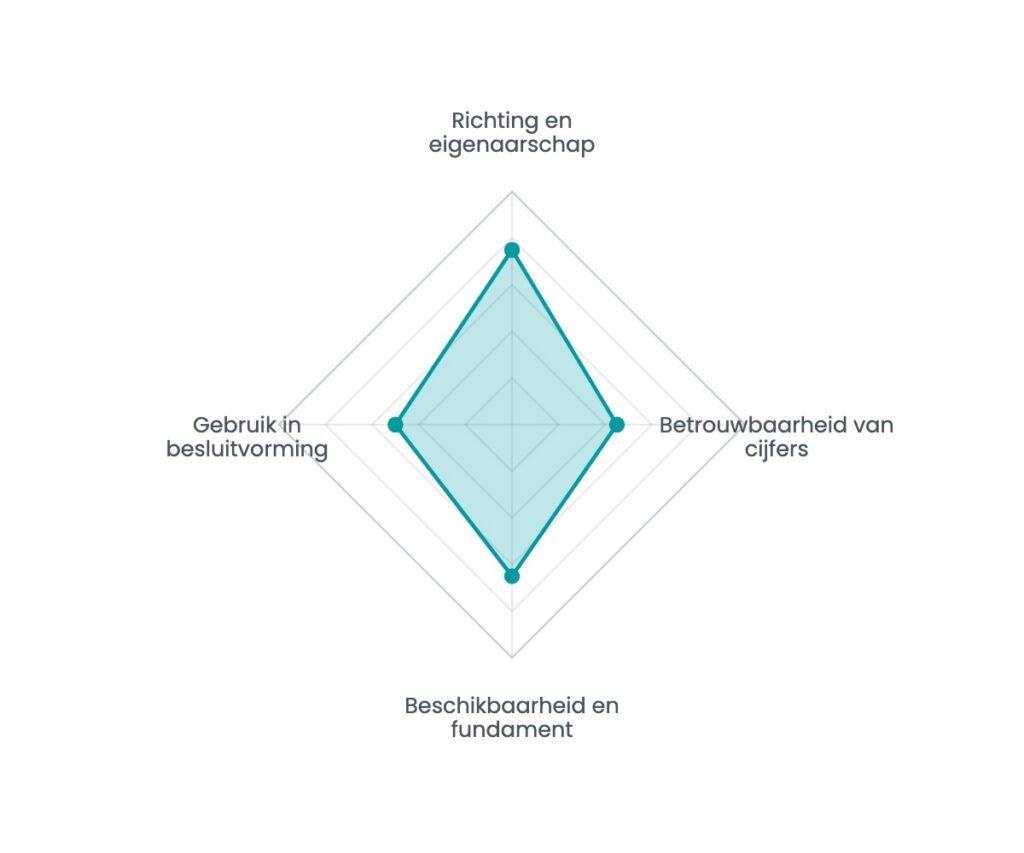
Sixteen questions, seven minutes, and an instant spider chart showing your strongest and weakest dimension. No e-mail address needed to see the result.
AI · 20 October 2026
A model that performs well in testing can deliver less than expected in practice. Learn why trust drives AI value in government and how to measure it.
Read the article →

AI · 18 October 2026
An honest checklist: six questions that determine whether your organisation is ready for AI, and what the next step is if the answer is no.
Read the article →

AI · 18 October 2026
Almost every organisation that gets serious about data faces the same question: who is actually going to do this? Build, hire or outsource?
Read the article →
Work with us
The people who build it also run it afterwards. Eindhoven, since 2014.
We use Google Tag Manager to measure visits and Leadinfo to recognise which company is visiting. Neither loads unless you agree. If you choose essential only, the site works as normal and we measure nothing. Cookie statement · Privacy statement
