• Nederlands

Solution

Data & reporting platform

A reporting environment in which figures are traceable to the source, definitions are agreed and authorisation decides who sees what. Built on your source systems, supported under agreements that are on paper.

Book an introduction → or ask a question first
Bright control room with three wall displays full of overviews

What it is

A solid foundation

The platform connects your source systems to one reporting layer: managed datasets with agreed definitions, dashboards and self-service, with authorisation and masking as the starting point. Below is what the platform does, and the agreements that come with it.
Twentynext’s data and reporting platform

The benefits at a glance

Agreed definitions
Traceable to the source
Accessible reports
Managed datasets
Self-service BI
One point of contact
Decoupled from sources
Master data management
Data quality
Application integration
Steering on KPIs
Cost-efficient
Privacy by design
Security by design

Explanation

The benefits in detail

Agreed definitions

“One truth” is not something we promise, often there are, rightly, two definitions of the same concept. What the platform does enforce: every definition has a name, an owner and one place where it is calculated. After that, discussions are about the decision, not about whose number is right.

Traceable to the source

Every figure in a report can be followed back to the source system it came from and the operations applied to it. A difference between two reports becomes explainable, instead of a stand-off.

Accessible reports

With NextView, our reporting portal, user groups get exactly the reports they are authorised for, without needing technical knowledge. Authorisation sits in the layer itself, not in individual reports: that is the design principle.

Managed datasets and reports

For managed datasets and reports, the agreements are written down: on content, performance, security and availability, and you can hold us to them. An automated delivery pipeline limits human error.

Self-service BI

Documented data marts on which users build their own analyses, in Excel or Power BI for instance. Authorisation travels with them: self-service does not mean everyone sees everything.

One point of contact

We monitor the environment and flag deviations before users report them. Response and resolution times are set out in an SLA: an agreement, not a best effort.

Decoupled from source systems

Source systems change or get replaced; that is normal. Because of the decoupling, such a switch barely needs to touch the reporting layer: the replacement is mostly a project on one side of the link, not a rebuild of the whole.

Master data, data quality and integration

One place where customer, product and supplier data is managed, with quality monitoring and links to the applications that use it. That prevents double entry and differences between systems.

Steering on KPIs

KPIs at organisation, department and team level, definition included. Reporting down to the individual is a choice you make explicitly, not something that creeps in.

Costs

The scalable cloud architecture charges by use, and less manual repair work lowers the cost of upkeep. What the platform costs depends on sources and usage: we work that out with you beforehand, not afterwards.

Privacy and security by design

Data is filtered and masked based on the authorisation of the logged-in user: a manager sees their own department’s absence figures, a colleague with limited rights only the last digits of a phone number. That makes GDPR, ISO 27001 and NEN 7510 questions answerable.
What you get

Built on your source systems, supported under agreements

A reporting environment in which figures are traceable to the source, definitions are agreed and authorisation decides who sees what.

What we deliver

Managed datasets and reports, and documented data marts on which your people build their own analyses. Authorisation sits in the layer itself, not in individual reports.

What we agree

Content, performance, security and availability are written down, and you can hold us to those agreements. Response and resolution times are set out in an SLA.

Who supports it

We do, as one point of contact. We monitor the environment and flag deviations before users report them.

Interested in our data and reporting platform?

Want to know whether this platform fits your source systems? A first conversation comes with no obligation: we respond within one business day.
Book an introduction
Our services

What else can we do for your organisation?

A few services that may help your organisation further:

Continue reading

Frequently asked questions

Will we get one version of every figure?

Not always, and rightly so: often there are two definitions of the same concept. What the platform does enforce: every definition has a name, an owner and one place where it is calculated. After that, discussions are about the decision, not about whose number is right.

What is NextView?

Our reporting portal. User groups get exactly the reports they are authorised for, without needing technical knowledge. Authorisation sits in the layer itself, not in individual reports.

What is a managed dataset?

A dataset or report for which the agreements on content, performance, security and availability are written down, and you can hold us to those agreements. An automated delivery pipeline limits human error.

Who supports the environment?

We do, as one point of contact. We monitor the environment and flag deviations before users report them. Response and resolution times are set out in an SLA: an agreement, not a best effort.

Can users build their own analyses?

Yes, on documented data marts, in Excel or Power BI for instance. The same authorisation rules apply: self-service does not mean everyone sees everything.

What happens when a source system is replaced?

Little, on the reporting side. The platform is decoupled from the source systems, so a switch is mostly a project on one side of the link, not a rebuild of the whole.

What about privacy and security?

Data is filtered and masked based on the authorisation of the logged-in user: a manager sees their own department’s sickness absence figures, a colleague with limited rights only the last digits of a phone number. That makes GDPR, ISO 27001 and NEN 7510 questions answerable.

What does it cost?

That depends on sources and usage; cloud costs are usage-based, and less manual repair work lowers the cost of upkeep. We work it out with you beforehand, not afterwards.

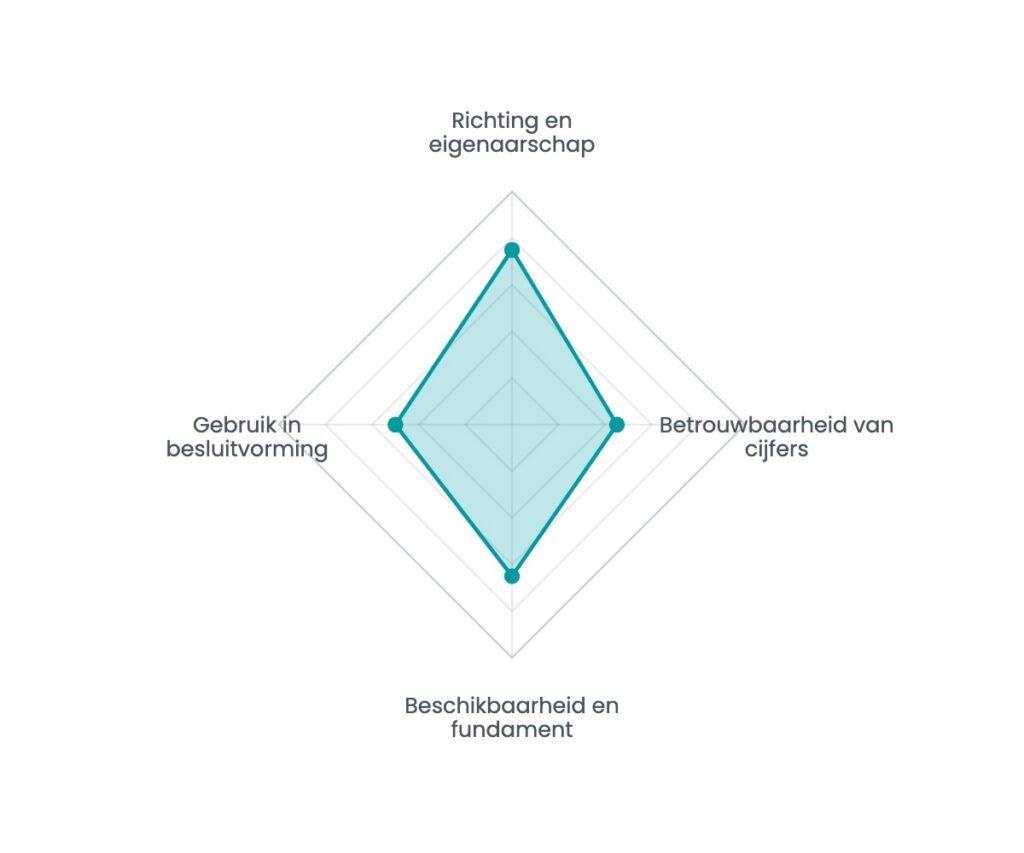
Example of a scan result: spider chart with four dimensions

Where does your organisation stand?

Sixteen questions, seven minutes, and an instant spider chart showing your strongest and weakest dimension. No e-mail address needed to see the result.

Work with us

Realise your project together?

The people who build it also run it afterwards. Eindhoven, since 2014.

Martijn van Grieken

Martijn van Grieken

Director Data & AI

Book an introduction or ask a question first