
• Nederlands

Solution

Inventory management

Twentynext develops data-driven solutions for retail. One of them is a replenishment system for fresh produce: it forecasts demand for products with a one-day shelf life and sets stock levels per supermarket accordingly.

Get in touch →
Wide aisle through a bright distribution centre

Unpredictable sales

The problem

Invisible demand and unpredictable sales. Replenishing fresh produce is a classic challenge, often called the newsvendor problem. Here it becomes even more complex because demand for the products is invisible. Frequent sell-outs make a reliable forecast difficult, and little historical sales data is available because sales patterns vary strongly by product and by supermarket.

The approach

The solution

The system describes the relationships between demand, sales and replenishment settings in mathematical models. Bayesian statistics gives reliable demand forecasts even when actual demand cannot be observed, and Sequential Monte Carlo techniques (particle filters) keep the calculations fast, even with frequent updates of the sales data.

Reliable demand forecasts

Testable and extendable

We test the forecasts against the actual business results of the current situation, which makes the estimates verifiable rather than merely plausible. The system can also be extended:

  • What-if analysis: simulate replenishment scenarios before you apply them.
  • Optimisation: calculate order settings automatically, tuned to your strategy: profit or service level.
  • Stock reporting: see where current settings deviate from the calculated ones.

Measured result

What it delivered

In a study of a single fresh product in ten randomly chosen supermarkets, optimising the order settings alone can raise profit by 4 to 7 percent, without changing anything else. How that was measured is described in the replenishment case.

More solutions for commerce and retail are on the sector page.

The newsvendor problem

The newsvendor problem, in short: whoever buys perishable goods has to choose in advance between two kinds of loss. Order too much and you get waste; order too little and you get lost sales. The name comes from the newspaper seller who must decide every morning how many papers to stock, while demand differs from day to day.

It appears wherever the sales opportunity is one-off: fresh produce in the supermarket, newspapers, fashion at the end of the season. How we solved it for fresh daily products is described in more detail in the case.
What you get

Not a package, but a working solution

Twentynext is not a software vendor. We investigate the question, design the solution and build it until it runs in production.

What we deliver

A solution that runs in your own process, on your own data. No licence for someone else’s software, and no report with recommendations.

Where we start

With the business question, not with the model. Which decision needs improving, and what information does it depend on? Technology is the last step, not the first.

Who builds it

The same people who design it. From data analysis and architecture to production and management, without handing over to another party.

Frequently asked questions

What is the newsvendor problem?

Anyone ordering perishable goods must choose in advance between two kinds of loss: order too much and you get waste, order too little and you get lost sales. The name comes from the newspaper seller who must decide every morning how many papers to stock, while demand differs from day to day.

How do you forecast demand when the shelf was empty?

On a day the shelf sells out, there is no way to see how many customers came afterwards. The model ties demand, sales and replenishment settings together instead of estimating them separately. So a sell-out day still yields information: sales ran up against the order quantity, so demand was higher than what crossed the counter.

Why Bayesian statistics?

Because it accounts explicitly for uncertainty instead of quoting a single number. Per product per store there were on average twenty to forty days of usable sales data; with that few observations the range is the answer, not the average. Sequential Monte Carlo methods keep the computation fast enough to take each new day of sales into account.

Where does the 4 to 7 percent come from?

From a study of a single fresh product in ten randomly chosen supermarkets. The study found that optimising the order settings alone can raise profit by 4 to 7 percent, without touching recipe, price or assortment. The figure applies to that product and those ten stores; it is no promise for a whole assortment, but it was measured rather than estimated.

Is this running anywhere?

Yes. The replenishment system has been running since 2020 and is under Twentynext’s management.

Does this also work beyond fresh produce?

The problem appears wherever the sales opportunity is one-off: fresh produce in the supermarket, newspapers, fashion at the end of the season. What we built and measured is for fresh produce.

What else can the system do besides forecasting?

Three extensions: what-if analyses to simulate replenishment scenarios before you apply them, optimisation that calculates order settings automatically for your strategy (profit or service level), and stock reporting that shows where current settings deviate from the calculated ones.

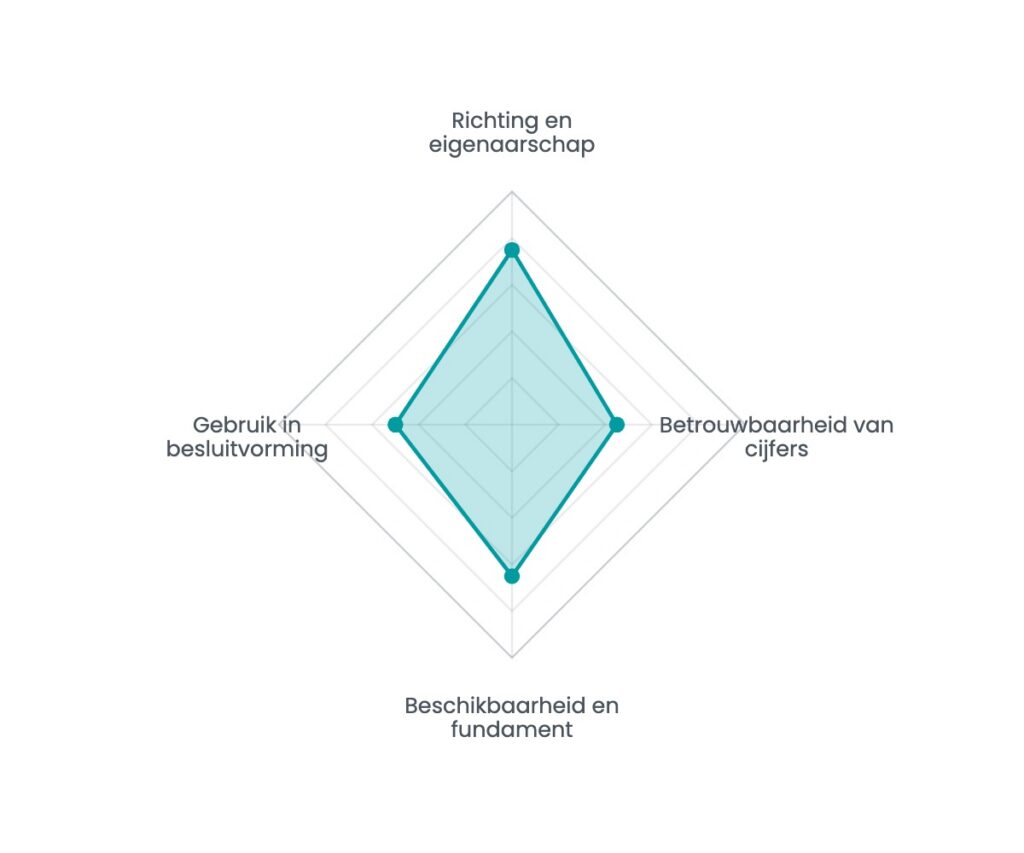
Example of a scan result: spider chart with four dimensions

Where does your organisation stand?

Sixteen questions, seven minutes, and an instant spider chart showing your strongest and weakest dimension. No e-mail address needed to see the result.

Work with us

Realise your project together?

The people who build it also run it afterwards. Eindhoven, since 2014.

Martijn van Grieken

Martijn van Grieken

Director Data & AI

Get in touch