

AI · 18 October 2026 ·

Translated with AI. This article was translated by an AI model from an article by Twentynext in another language, and the translation was checked automatically against the original. Verify figures and sources before acting on them. See our disclaimer.
The question now comes from all directions: from the executive board, from the supervisory board, from employees who already use ChatGPT at home. “What are we actually doing with AI?” And so a pilot is started. That pilot produces a nice demo, everyone is enthusiastic, and then nothing further happens.
A familiar risk for any organisation that is starting with AI. On closer inspection it often turns out that the preconditions were missing: no owner, no visibility of the data, no plan for ongoing management. This article gives you an honest checklist to test your AI readiness, before you invest budget, time and credibility.
AI readiness is the extent to which your organisation is able to implement AI effectively and to benefit from it structurally or scale it up. Note that second part. Setting up a pilot is one thing; keeping an application in production, with ownership, management and oversight, is a fundamentally different task.
Being ready for AI does not mean that you have everything in order. It means that you know where your gaps are, that those gaps are not showstoppers for your first use case, and that you have a plan to close them. That is precisely what readiness checklists are for: mapping gaps before larger investments follow.
Nor does it mean that you have to wait until everything is perfect. Those who postpone the start until “the data is in order” run the risk that the start never comes. The art lies in the right sequence: starting small enough that your current maturity can handle it.
The first test is the simplest and is the one most often skipped. Answer these questions honestly:
If the answer to any of these questions is “no” or “not really”, you are not ready. In that case the first step is not tooling, but a conversation with the business about where the real friction is.
A common pitfall: starting from the question “what can we do with AI?” instead of “where do we get stuck, and could AI help with that?”. The first question produces demos. The second produces candidate solutions.
Almost every AI readiness checklist names high-quality, accessible data as a core condition. But the question is not “is our data perfect?”. The question is: is the data that this particular use case needs good enough, findable and accessible?
Test yourself on these points:
Our advice: explicitly reserve time in your planning to genuinely test data quality before you build. It is unobtrusive work, but it largely determines what your application is worth.
Readiness is not only about technology and data, but explicitly also about processes and people. The NIST AI Risk Management Framework expressly treats AI as a sociotechnical issue: the organisation around it helps determine whether an application holds up. Test:
So take the adoption question just as seriously as the technology. An application that is not used delivers, by definition, nothing.
Governance sounds like something for large organisations, but it is a precondition for scaling up. The NIST framework even puts governance first: it is the first of its four functions, and it runs through all the others. The core questions are relevant to everyone:
Governance questions do not disappear by postponing them. Those who include them from the start can build requirements into the design instead of adapting a built solution to them afterwards.
The temptation is great to score the checklist and put an “AI readiness score” on a slide. Do not do that. A score suggests that you are ready at an eight out of ten, and that is not how this works.
Use the checklist differently:
Be honest about lead times. How much time it takes to close gaps in data ownership, governance and process embedding varies greatly per organisation and per gap. Say so in advance and do not promise quick results; that prevents disappointed stakeholders halfway through.
You do not need to buy in a large assessment programme to get started. Do this:
Plan a half-day working session with the process owner, someone who knows the data, someone from privacy/compliance and a decision-maker. Choose one concrete use case in advance. Walk through the four parts of this checklist together and write down for each part: what do we know, what do we not know, what is a showstopper?
The outcome of that afternoon is a shared, honest picture of where you stand, and a concrete list of what needs to happen before you build.
And if the outcome is that you are not ready yet? Then you have drawn that conclusion before it cost money and credibility. That too is a gain. If you would like to hold that working session with someone from outside present, that is where our AI consultancy begins.
Want to know where you stand first? Take the free Data Maturity Scan: sixteen questions, instant results.
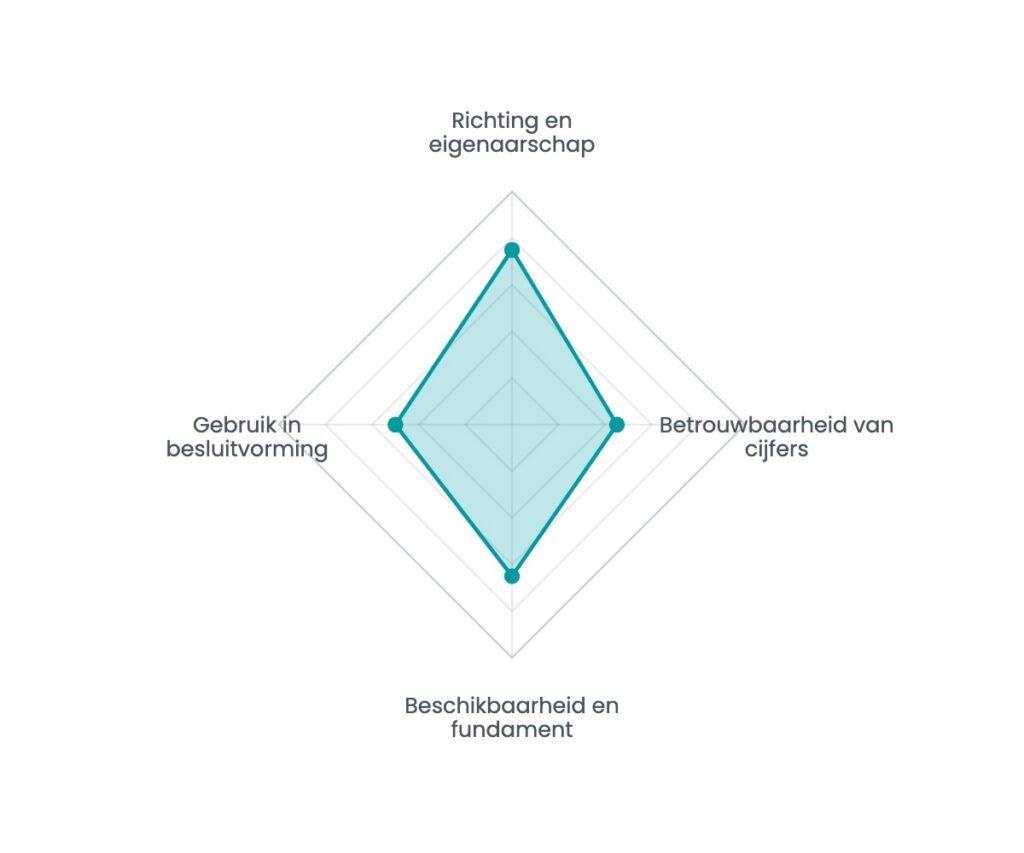
Sixteen questions, seven minutes, and an instant spider chart showing your strongest and weakest dimension. No e-mail address needed to see the result.
AI · 20 October 2026
A model that performs well in testing can deliver less than expected in practice. Learn why trust drives AI value in government and how to measure it.
Read the article →

AI · 18 October 2026
Almost every organisation that gets serious about data faces the same question: who is actually going to do this? Build, hire or outsource?
Read the article →

AI · 18 October 2026
Suppose the feature your Copilot pilot relied on is renamed, relicensed or moved after an update. Criteria and a scorecard for choosing a consultancy.
Read the article →
Work with us
The people who build it also run it afterwards. Eindhoven, since 2014.
We use Google Tag Manager to measure visits and Leadinfo to recognise which company is visiting. Neither loads unless you agree. If you choose essential only, the site works as normal and we measure nothing. Cookie statement · Privacy statement
