

AI · 4 May 2026 ·
Building an app now takes a weekend. What comes after that to turn it into a platform you can run, scale and rely on.

Building apps has become almost child’s play. Which is wonderful, until it is not.
At Twentynext we see it happen daily. Someone has an idea on a Friday afternoon, spends the weekend with Cursor, Lovable or Claude, and by Monday morning something that works is online. What used to be a project of months, with requirements, sprint planning and a development team, is now sometimes a matter of a few evenings of vibe coding. The barrier to making something has simply gone.
And honestly? I think that is a wonderful development. It means entrepreneurs can validate faster whether their idea holds up. That teams inside organisations no longer have to wait for the IT department’s priority list. That innovation finally leaves the laboratory and simply… happens.
But that is exactly where the catch is.
Because yes, you have an app. But as soon as that app is being used, by real customers, with real data, in real processes, you no longer have a “little app”. You have a digital product. Or, before you know it, a platform.
And platforms come with responsibilities. They have to be available when your customer clicks on them at half past five in the evening. They have to be secure when someone leaves personal data in them. They have to grow along when things suddenly take off. And they have to stay stable when you add new functionality, because otherwise you spend every Friday afternoon putting out fires instead of working on your business.
Gartner research has shown for years that the total cost of ownership of software falls overwhelmingly after the first delivery, sometimes as much as eighty per cent (Gartner, 2023). The build is, however odd it sounds, often the cheapest and the shortest part of the story.
This is where it pinches in practice. The rise of AI-driven development has sped up building. Excellent. But the organisation around it, operations, ownership, governance, has not grown at the same pace.
You then get the situations I see go by more often than I care to:
The awkward thing is that these problems are rarely visible on day one. They creep in. And by the time they are noticed, clearing them up often costs more than the building ever did. Painful, but true.
None of this is a criticism of vibe coding itself. On the contrary. But as Conway’s Law (Conway, 1968) taught us decades ago: the structure of your software mirrors the structure of your organisation. If you build at speed without an organisation around it, you get software that shows it.
At Twentynext we believe the real value is not in building cleverly, but in keeping things running for the long term. That may sound a little dull, and honestly, sometimes it is. Operations is not glamorous. But it is the difference between a product that is still alive in two years and one that by then sits in a digital shoebox in the attic.
Our role usually begins where others stop. The app is live, the first real users have arrived, and then comes the moment when someone thinks: right, how do we actually keep this in the air? That is where we come in.
In concrete terms that means:
Onboarding the application. We dive in. Which architecture, which dependencies, which tools, which data flows, which risks? A technical health check, you might call it.
Privacy and compliance in order. How is personal data processed, and does that square with the GDPR? Which data processing agreements are still missing? With the obligations coming under the EU AI Act (European Commission, 2024), this layer only becomes more important.
Security and access management. The basics. Who may do what, how are accounts secured, how do we handle changes? Not glamorous, but essential.
Monitoring and performance. Because without monitoring you are flying blind. And flying blind works fine, until it does not.
Stability and further development. How do you make sure new features do not break something else every time? With a considered release approach, controlled deployments and a measure of common sense.
What sets us apart is that we know both sides. We have built software for years and run it for years. That combination matters more than you would think.
Because running software well takes an understanding of how it was built. And developing it further well takes an understanding of what can break in production. Anyone who can only do one always misses something of the other. It is a little like cooking and washing up: only when you do both do you really understand what to put in the pans.
The market moves fast. AI lowers development costs, agents keep getting more capable, and the amount of software organisations run is rising sharply. McKinsey recently estimated that AI-driven development can raise the productivity of software teams by thirty to fifty per cent (McKinsey & Company, 2024). That is great news for anyone building. But it also means: more apps, more data, more dependencies, more things that can fall over.
Whoever professionalises their operations now builds a head start. Whoever lets it slide gets the bill sooner or later. And that bill is usually higher than the subscription for decent operations.
Most entrepreneurs and teams we speak to mainly want to move forward. Build, help customers, grow. I understand that completely; it is why you started. So we would rather take the running of it off your hands.
We do that at different levels, depending on what you need: from taking over an existing platform entirely to a lighter model in which we set up governance and monitoring and your team keeps doing the daily work. No one-size-fits-all, because every organisation starts from a different place.
Vibe coding makes building faster, but speed without operations is fragile.
The organisations that make the difference a few years from now will not be the ones that got something live fastest. They will be the ones that also managed to make their solutions secure, stable and scalable. That balance between speed and solidity is exactly what we believe in.
The future of software will be faster, more accessible, smarter. You are entitled to be enthusiastic about that; I certainly am. But that future also asks for a measure of maturity. Not only in the building, but above all in running sensibly what we build.
Have you built something, or had something built, and does the feeling nag that the running of it is not quite right yet? Or do you want to prevent growth from turning into security, privacy or performance problems later on?
Do get in touch. We are happy to take a look with you, with no obligation.
References
Conway, M. E. (1968). How do committees invent? Datamation, 14(4), 28-31.
European Commission. (2024). Regulation (EU) 2024/1689 laying down harmonised rules on artificial intelligence (AI Act). Official Journal of the European Union.
Gartner. (2023). IT Key Metrics Data: Application Total Cost of Ownership. Gartner Research.
McKinsey & Company. (2024). The economic potential of generative AI: The next productivity frontier. McKinsey Global Institute.
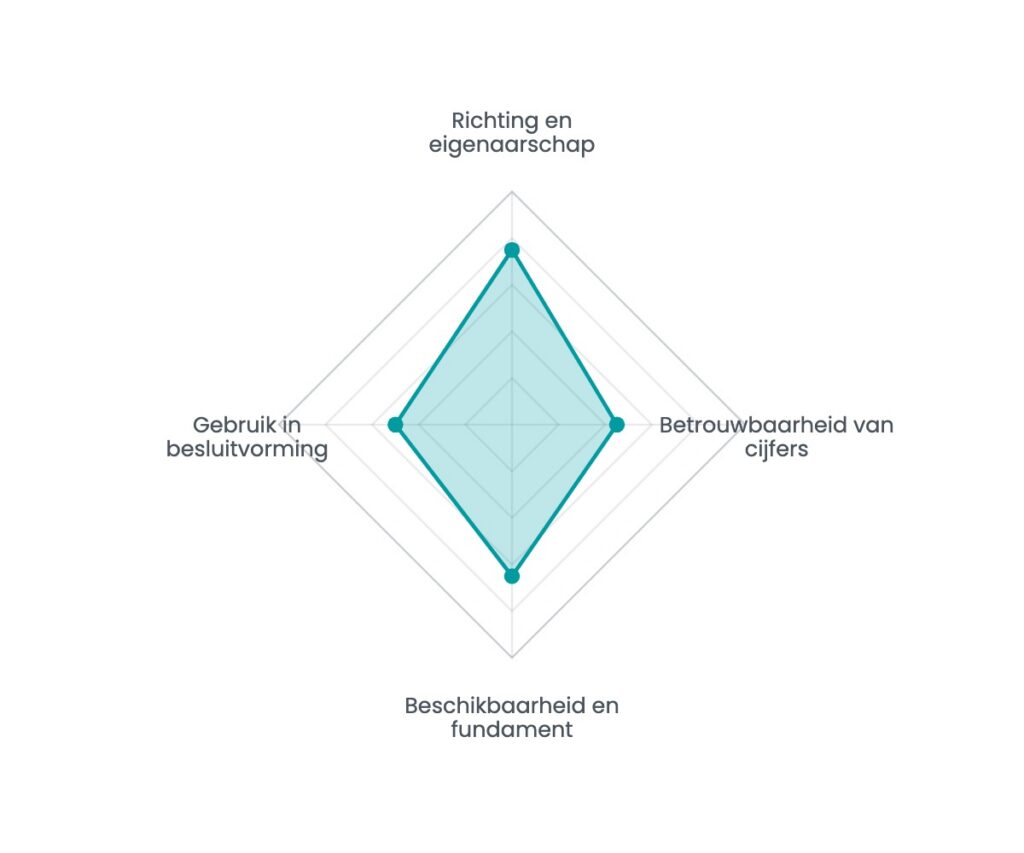
Sixteen questions, seven minutes, and an instant spider chart showing your strongest and weakest dimension. No e-mail address needed to see the result.
AI · 21 September 2026
Sixteen questions, seven minutes, four dimensions on five levels, no email needed. What the scan measures, how it compares and how to use it.
Read the article →

AI · 6 September 2026
Built an app with AI and usage is growing? How we take it into managed service: review the code, make it scale and have it pentested independently.
Read the article →

Cases · 6 September 2026
Read the article →
Work with us
The people who build it also run it afterwards. Eindhoven, since 2014.

Martijn van Grieken
Director Data & AI
We use Google Tag Manager to measure visits and Leadinfo to recognise which company is visiting. Neither loads unless you agree. If you choose essential only, the site works as normal and we measure nothing. If you arrived via an advertisement in ChatGPT, we also use the OpenAI measurement pixel to attribute conversions to that advertisement. Cookie statement · Privacy statement