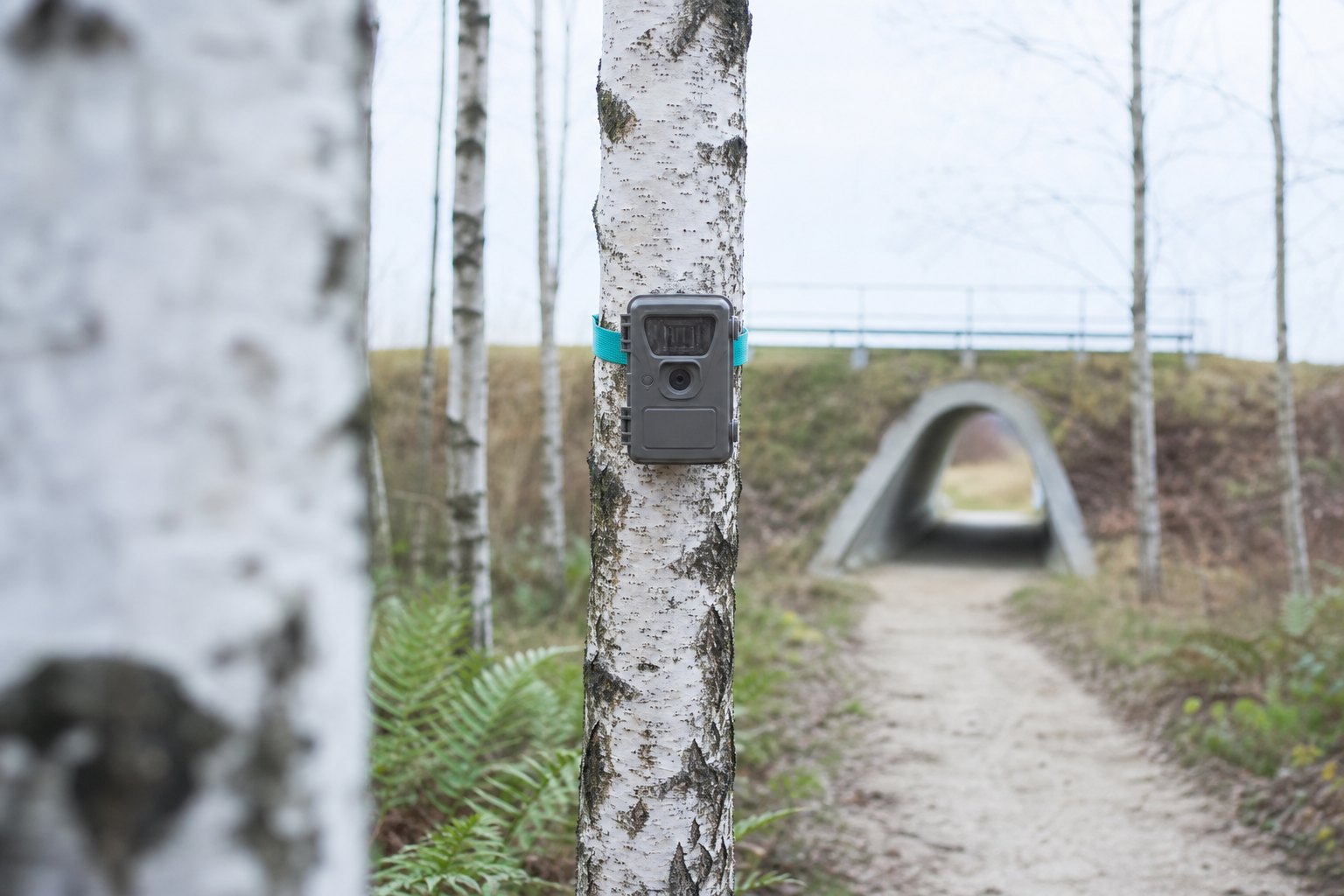
MIT Zuid feasibility project Intelligente Wildstand Monitor, 2018, Noord-Brabant.
Anyone who wants to measure the effect of an ecoduct or fauna tunnel needs to know which wildlife passes before and after construction. That counting was done with wildlife cameras and with people noting, image by image, how many animals passed and of which species. Labour-intensive, and exactly the work that can be automated.
What the feasibility project researched
Whether intelligent image recognition on wildlife camera images can count animals and also tell apart species that look alike, such as fallow deer and red deer. The reason: Dutch nature policy aims to remove bottlenecks between the ecological network and infrastructure with fauna passages, and their effect has to be measured, with counts before and after an intervention.
The project
Carried out in 2018 as an MIT Zuid feasibility project in the High Tech Systems and Materials sector: EUR 62,400 in project costs, of which EUR 24,960 MIT funding.
What came next
The work continued in the population dynamics platform with Wageningen University & Research and the Belgian government, in which species are recognised with an accuracy above 98 per cent and numbers and movement patterns are tracked as well. Read that case.
About this article. We check facts and sources carefully, but cannot guarantee that they are accurate or complete. See our disclaimer.