

AI · 12 October 2026 ·
How AI combines past quotes, post-calculations and current prices into a well-supported quote, and why you start with ten completed projects.

Many companies prepare quotes based on experience, earlier calculations and the knowledge of a few employees. What if you could automatically take your historical project data, current costs and expected market developments into account as well? With modern AI techniques, that is now possible.
At many companies, preparing a quote starts with looking up a comparable project. What did we offer back then? Which materials were needed? How many hours did we budget? And what would be a reasonable price for the new assignment?
That usually takes a fair amount of experience. Experienced employees know which projects are comparable, which risks to allow for and where there is room in the price.
That knowledge is often hard for others to access. At the same time, much of the information behind earlier decisions is already inside the organisation: in quotes, project records, timesheets, purchase invoices and financial systems.
The interesting question is how much of that information we actually use when we prepare a new quote.
A historical quote shows what a company once planned to deliver, and at what price. At least as interesting is what actually happened afterwards.
Was the project delivered within budget? How many hours were actually spent? Which materials turned out more expensive? Was there unexpected work? And how much of the budgeted margin was left in the end?
That kind of information is often spread across different systems and documents. Modern AI techniques make it possible to bring that data together and reveal relevant patterns.
For a new request, a system can for example find comparable projects, compare original budgets with actual costs and point out which parts are consistently underestimated. That gives a better basis for the next quote.
It gets more interesting when we combine historical data with today’s situation.
A project that cost €100,000 last year will not necessarily cost the same today. Material prices change, staff costs rise and supplier availability can differ. On top of that, some projects are only carried out months after the quote is issued.
By combining current price information, historical trends and forecasting models, companies can calculate different cost scenarios. What happens to the margin when raw materials become more expensive? Which cost items carry the largest financial risk? What does a longer delivery time mean for the planning?
AI can help answer these questions, provided the underlying data is reliable. A forecast remains an estimate, of course. The aim is for a company to choose more deliberately which assumptions and risks it builds into a quote.
A company does not need to replace all its existing systems for this.
With techniques such as Retrieval-Augmented Generation (RAG), AI systems can find relevant information in documents and business data. Think of old quotes, technical specifications and project reports.
Through connections with existing administrative systems, actual project costs, current supplier prices and available capacity can be added.
Calculation models handle the financial calculations and scenario analyses. Generative AI then helps bring all the information together in a clear proposal, including a draft quote and the reasoning behind it.
The result is a system that, besides text, also shows which information and calculations a proposal is based on.
This does require a clear separation between facts, assumptions and forecasts. A language model must not invent missing cost prices, and financial calculations must remain verifiable.
Suppose an employee receives a new request for a quote. Instead of searching through dozens of old documents, they can ask the system for comparable projects.
The system shows how those projects were budgeted at the time, what the actual costs were and which deviations are relevant to the new request.
Current prices and different delivery scenarios can then be included. The result is a draft quote in which amounts, assumptions and risks are backed up in a verifiable way.
The employee reviews the outcome, adjusts where needed and ultimately decides what goes to the client.
The same approach can be applied to project plans, capacity planning, purchasing and financial forecasts.
The biggest obstacle usually lies in the availability and quality of the data. If historical quotes cannot be linked to actual project costs, for example, it is hard to draw reliable conclusions about profitability.
That is why a first step does not need to be big at all.
Take ten or twenty completed projects. Collect the original quotes, budgets, post-calculations and timesheets. Examine which data is available, which differences become visible and where information is missing.
You can then assess whether AI actually helps to prepare new quotes faster or with better support.
At Twentynext, this is how we look at the possibilities of AI. We start with the business process and the decisions made within it. Then we examine which data is available and which technology helps make that information usable. Read more under AI consultancy.
Through their past projects, companies have often built up a wealth of experience. The next step is to make that experience systematically available when new decisions are made.
Curious what your own project data can already tell you? Book an introduction, and we will look together at a first selection of projects. We respond within one working day.
About this article. We check facts and sources carefully, but cannot guarantee that they are accurate or complete. See our disclaimer.
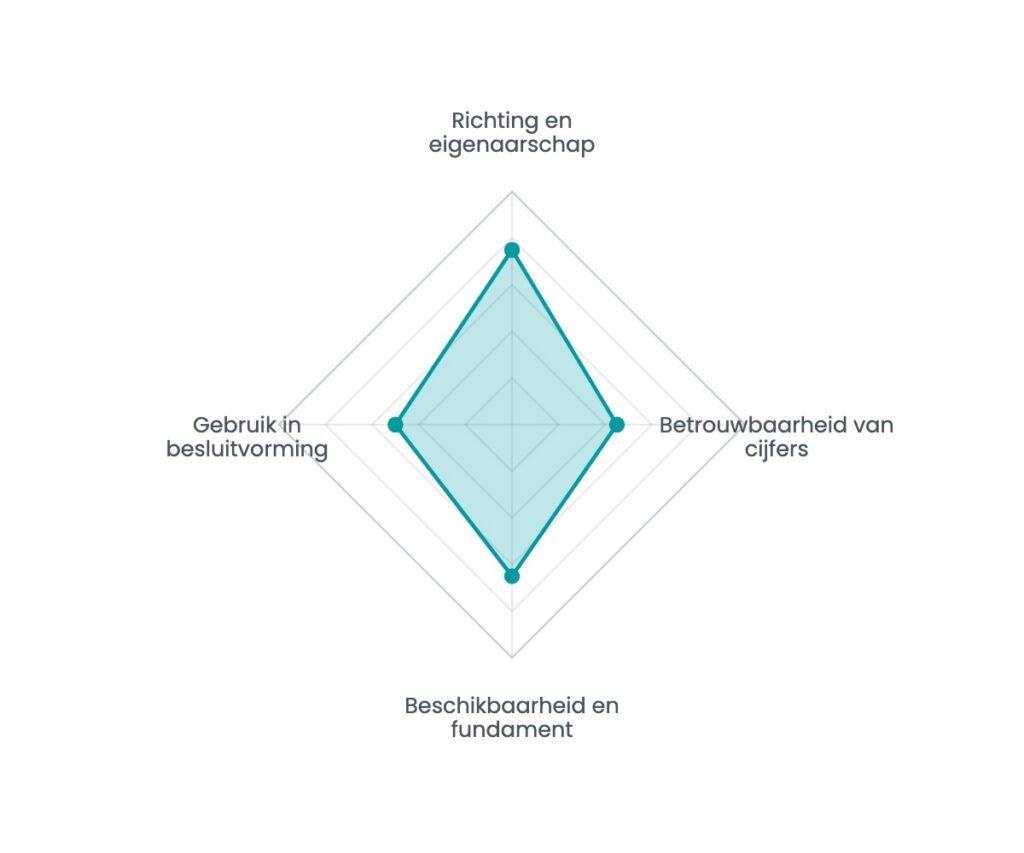
Sixteen questions, seven minutes, and an instant spider chart showing your strongest and weakest dimension. No e-mail address needed to see the result.
AI · 20 October 2026
A model that performs well in testing can deliver less than expected in practice. Learn why trust drives AI value in government and how to measure it.
Read the article →

AI · 18 October 2026
An honest checklist: six questions that determine whether your organisation is ready for AI, and what the next step is if the answer is no.
Read the article →

AI · 18 October 2026
Almost every organisation that gets serious about data faces the same question: who is actually going to do this? Build, hire or outsource?
Read the article →
Work with us
The people who build it also run it afterwards. Eindhoven, since 2014.
We use Google Tag Manager to measure visits and Leadinfo to recognise which company is visiting. Neither loads unless you agree. If you choose essential only, the site works as normal and we measure nothing. Cookie statement · Privacy statement
