Getting the basics right

Why do our reports tell different stories?

Usually because they measure different things. One report counts customers per contract, the other per organisation. Both numbers can be correct. Which number you need depends on the decision you want to make. A data foundation records for each figure what it means, who is responsible for it and which system it comes from.

Discuss your question →
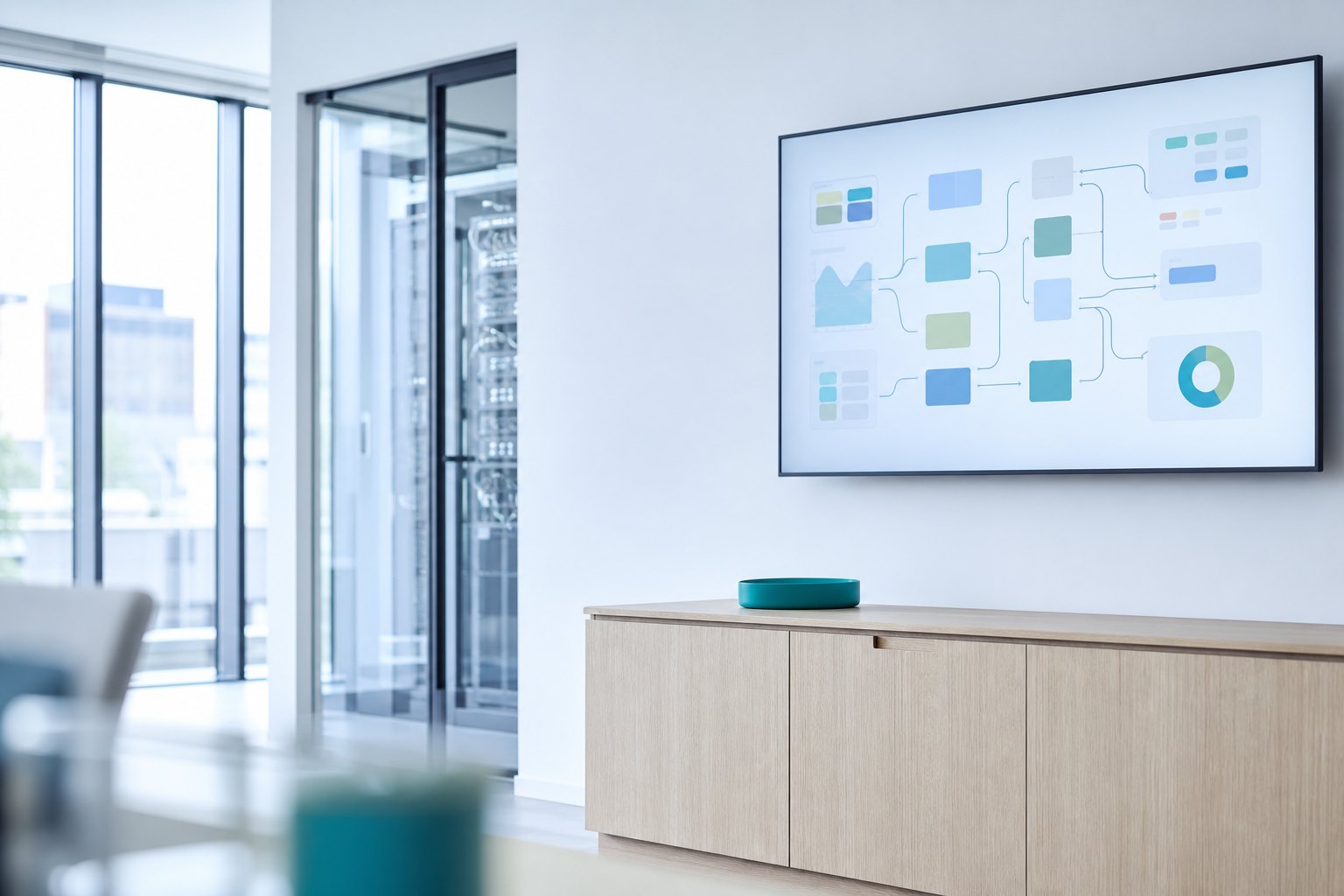
Wall screen with a diagram of connected blocks and flows

A data foundation is everything that makes sure your figures are right before a report or AI model runs on them. You know what data there is. Every term has one name, one owner and one place where it is calculated. For every figure you can trace which system it comes from. It is set down who may see what, and someone watches over the whole once it is running.

In practice, an AI question often starts with that foundation.

Two numbers that are both correct

It almost always starts the same way. Someone presents a number, someone else has a different number, and the rest of the hour goes into working out which one is right. Sometimes there really is something wrong with the data: missing, duplicate or wrongly linked records exist and have to be ruled out first. More often both numbers are correct and answer a different question. One counts customers per contract, the other per organisation. One excludes cancelled orders, the other keeps them in.

The problem then is that the definition is not recorded anywhere and its origin cannot be traced. Every department has good reasons for its own definition and nobody owns the whole. Put everything into one data warehouse and the conflicting definitions move along with it. Once AI is added, it becomes more visible: a model trained on poorly defined data produces outcomes whose meaning remains open to dispute.

Building blocks

What a data foundation contains

1. Purpose and ownership. Which decision needs to improve, and who owns the data behind it? We only start building once there is an owner.

2. Agreed definitions. We do not promise "one truth"; there are often two legitimate definitions of the same term. But every definition has a name, an owner and one place where it is calculated.

3. Traceability to the source. For every figure you can trace which source system it comes from and which transformations it went through. That makes a difference between two reports explainable.

4. Data quality and master data. One place where customer, product and supplier data is managed, with monitoring of its quality. More on this in Data quality and AI.

5. Authorisation and privacy by design. Data is filtered and masked according to the user's rights. That happens in the data layer itself, so it does not have to be arranged report by report. That makes questions about the GDPR and information security answerable. Being able to show how an AI decision was made is a different question. That is the subject of the white paper Proving, not complying.

6. Running it. Monitoring and incidents, changes and further development, under agreements that are set down in writing. We can run it ourselves or hand it over to your own team. What happens when a platform becomes unmanageable is described in Our platform is becoming unmanageable.

Five signs that the foundation needs attention first

You recognise it in these situations:

  • Meetings are about whose number is right and the decision never gets discussed.
  • A dashboard is not trusted and Excel lists run alongside it.
  • Nobody dares to touch the data platform any more.
  • An AI pilot succeeded but never reached production.
  • Nobody can say who may see which data.

Recognise one or more? How we test an existing pilot is described under What we do.

Example

A data platform Twentynext built and runs

AxionContinu · elderly care · in use since 2023, run by Twentynext

A data platform for AxionContinu

AxionContinu decides what is measured and steers on the figures. Twentynext built the data and reporting platform that brings together the client record, rosters and finances, and the analyses on top of it. Users open their reports in NextView, the reporting portal Twentynext built. The platform has been in use since 2023 and Twentynext runs it. All six building blocks above are in place there: ownership, definitions, traceability, data quality and master data, authorisation, and running it.

Read the AxionContinu case · How we work with care organisations

Data foundation, data platform, data architecture: what is the difference?

Data foundation: the whole of agreements, quality, rights and running that makes data reliable. That is organisation and technology.

Data platform: the technical environment where sources come together and where reports and AI run.

Data architecture: the design that records what is determined where: which source leads, which definition applies and how a number travels from source to report.

Further reading: the white paper From dashboard to decision, our approach, step by step, Data quality and AI, Setting up data-driven working and What is data-driven working? A practical explanation for decision-makers. The platform itself is covered under Data infrastructure, steering on the figures under Data-driven working.

Frequently asked questions

What is a data foundation?

Everything that makes sure your figures are right before a report or AI model runs on them: agreed definitions with an owner, figures traceable to the source, data quality and master data, authorisation on who may see what, and running it once it is live.

How do I know whether my organisation's data is ready for AI?

Signs that the foundation needs attention first: discussions about whose number is right, dashboards that are not trusted, a data platform nobody dares to touch, a pilot that never reached production and nobody who knows who may see which data.

What is the difference between a data foundation and a data platform?

The data foundation is the whole of agreements, quality, rights and running that makes data reliable. The data platform is the technical environment where sources come together and where reports and AI run. A platform without a foundation produces fast figures nobody trusts.

What do you need to arrange before deploying Copilot or another AI assistant?

Above all the rights: who may see which data and documents. An assistant finds everything a user has access to. You also need agreed definitions and an owner per data source.

Do you also take over an existing data platform?

Yes. We run data platforms and AI solutions, including ones others built. The documentation needed to hand it over is part of the work.

What to discuss with us first

Bring one decision for which the figures currently diverge. Come with the person who takes the decision and someone who works with the figures or the process every day. The first conversation is without obligation. Ask your question.

We aim to respond within one working day.

Work with us

Mind your business. We do the rest.

We agree in advance who runs the system. Eindhoven, since 2014.