Quality inspection

Can AI take over visual inspection on your production line?

Often, for the most part. An image recognition model assesses every product at line speed, against your own rejection criteria. Your inspectors keep the cases the model is unsure about. How well that works depends mainly on the images, and on the examples of rejects you already have.

Discuss your question →
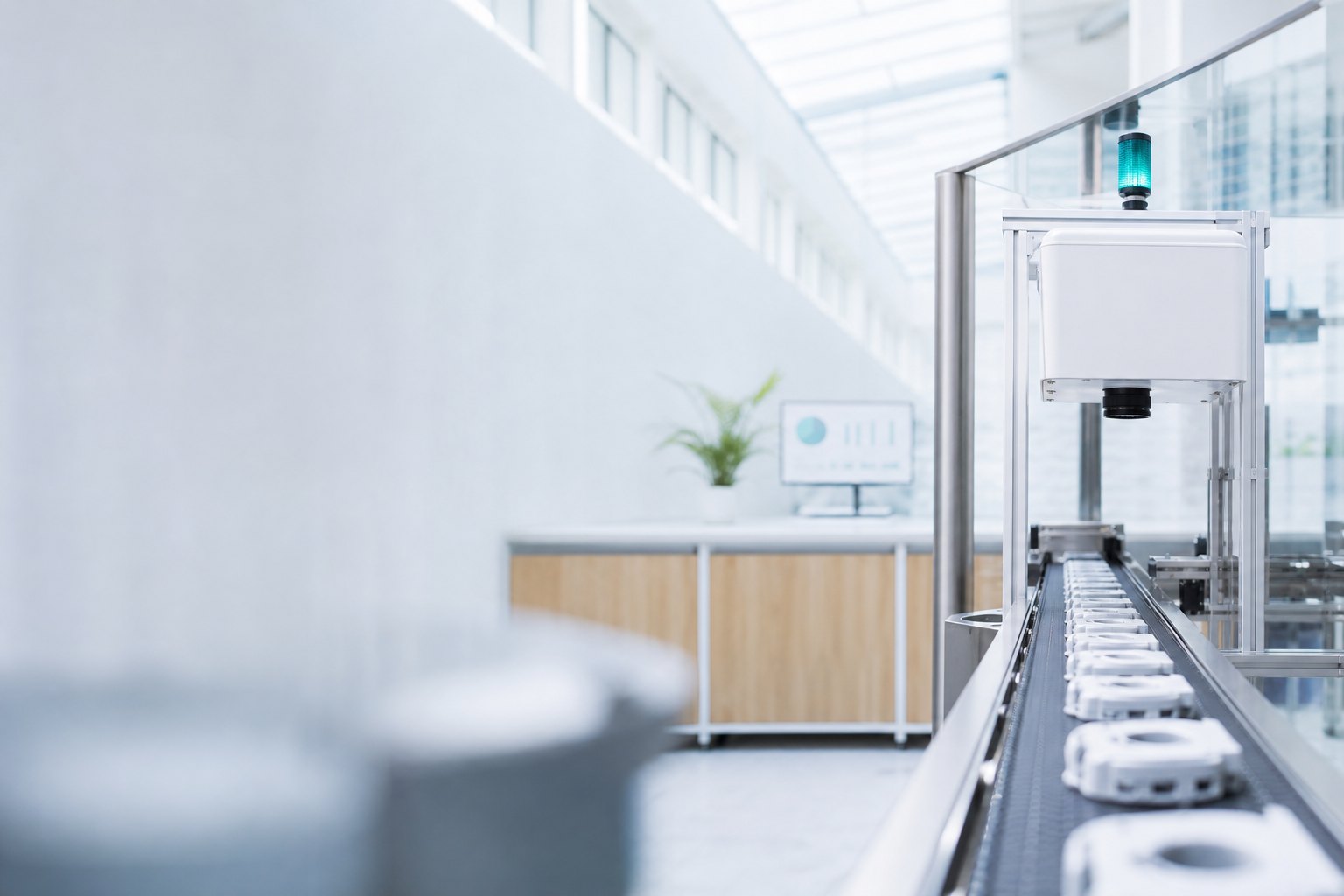
Conveyor belt with white parts under a camera unit

AI quality inspection, also called AI quality control or visual inspection, is the automatic assessment of every product on the line by an image recognition model. The model is trained on your own products and knows what counts as a reject for you. A spot check covers part of production. The model looks at everything, and gives a defect the same verdict at the end of the night shift as at the start.

What the model does and what your inspector keeps doing

The model assesses every product while the line is running, without slowing it down. It also picks up defects that are hard to catch with the naked eye, such as hairline cracks, colour variation or misalignment.

Manual inspection is still needed. The model takes away the volume and passes the doubtful cases to a person. The share of doubtful cases is the measure we steer by: the smaller that share, the more of the work the model does.

What it needs

Four things that decide whether it works

1. Images of sufficient quality. Stable lighting and a fixed camera set-up matter more than a more expensive camera. Lighting that changes with the seasons and products that lie slightly differently only show up on the real line.

2. Examples of rejects. The model learns from your own rejected products. If you have kept hardly any, the project starts by collecting them. That mainly determines the lead time.

3. A place in the process. The verdict has to land somewhere: a signal to the operator, a reject mechanism or a record in your existing systems. Connecting to your production equipment is part of the work.

4. Maintenance after go-live. A model on a production line ages. Product variants are added, raw materials change, a camera gets moved. Agree in advance who keeps the model up to date. We can do that.

From rejects to root cause

Every verdict the model gives is also data: product, time, line, batch and type of defect. With enough verdicts you can see:

  • Which combination of settings, batch and time precedes a spike in rejects.
  • Which small deviations signal that something on the line is drifting, before a product falls outside the specification.
  • Where in the process the cause lies, and not just where it becomes visible.

That reporting lands in the systems you already use. What else we do is set out under Services.

Example

Measuring from images, in production

Skully Care · healthcare · in production since 2024

Measuring skull deformation from a single photo

Skully Care lets therapists measure the shape of a baby’s skull with a single photo. Twentynext developed the algorithm that automates that measurement. It has been running in their app since 2024. A different sector with the same core: taking a measurement from an image in exactly the same way every time.

Read the Skully Care case (in Dutch) · Our cases

Quality control, quality inspection, defect reporting: what is the difference?

Quality control: assessing whether a product meets the standard, by hand or automatically.

Quality inspection and visual inspection: often used interchangeably in industry for the same thing, namely checking every product against a visual standard.

Defect reporting: what you do with the verdicts. The rejects you collect show where in the process things go wrong.

Further reading: CRISP-DM, the method behind how we approach a project.

Frequently asked questions

What does AI quality inspection do on a production line?

A model assesses images from your line against your own rejection criteria, trained on your own products. It works at production speed and gives the same defect the same verdict every time. Doubtful cases go to an inspector.

What if we have kept hardly any rejected products?

Then the project starts by collecting them. The model learns from your rejects, so without examples it has nothing to learn from. That mainly determines the lead time.

Why is introducing a vision model harder than it looks?

The model is the smallest part. Lighting that changes with the seasons, products that lie slightly differently and a line that cannot stop decide whether it works. That is why we start by collecting images on the real line, before any model is trained.

Does it also work in the food industry?

Often especially there. Natural products vary in colour, shape and size, which makes fixed inspection rules unreliable. A model trained on your own product flow learns which variation is normal and what is a defect.

Does Twentynext supply an off-the-shelf inspection package?

No. We build a model on your own images and rejection criteria and connect it to your line and your systems. There are also suppliers of complete inspection systems. Which route fits depends on how standard your product and your criteria are.

What to discuss with us first

Bring a few photos of good and rejected products, and tell us where on the line inspection happens now. Come with the person who makes decisions about the line and someone who inspects every day.

We aim to respond within one working day.

Work with us

Mind your business. We do the rest.

We agree in advance who runs the system. Eindhoven, since 2014.